Drainage Strategy for Sites at Risk of Surface Water Flooding
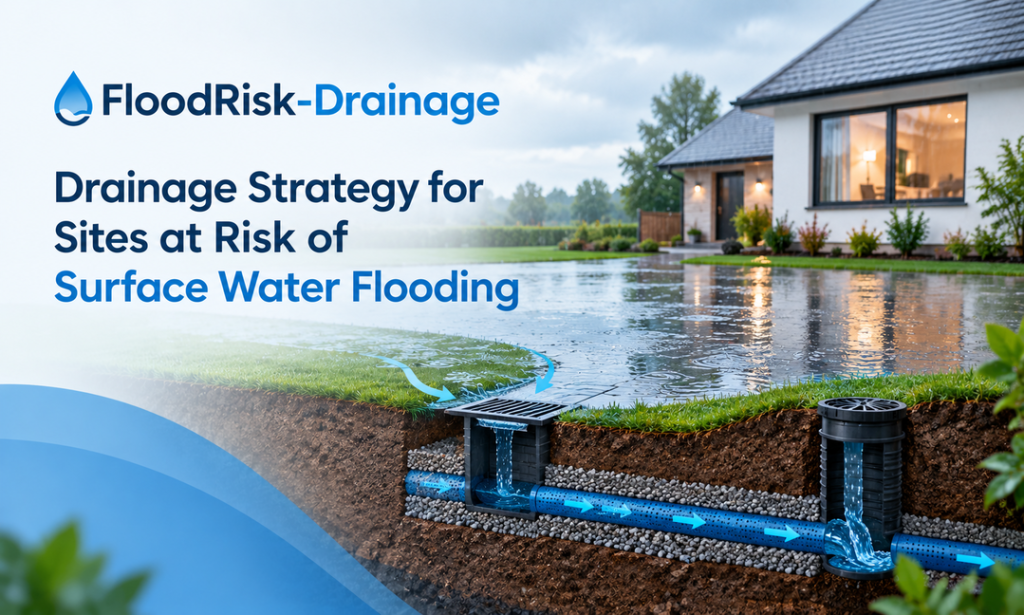
Surface water management is important for new and existing developments to reduce flooding, protect properties and meet planning requirements. Proper drainage design helps manage rainwater runoff and reduce the risk of waterlogging during heavy rainfall. Careful planning also helps prevent property damage and supports safer construction. Thus, a good drainage layout directs excess water away from buildings, roads, and other areas while supporting long-term site protection.
What Factors Affect Surface Water Flood Risk?
Various site factors can affect the probability of flooding due to surface water, including rainfall, soil conditions, drainage facilities and topography.
Rainfall Intensity and Surface Runoff
Excessive rainfall may lead to surface water flooding, particularly if the rain rate exceeds the infiltration rate. Roads, pavements, car parks, and other impermeable surfaces prevent water from soaking into the soil. Water does not percolate through roads, pavements, etc. Knowing the rainfall pattern can help to determine where water management is needed and what flood protection measures are appropriate.
Ground Conditions and Site Levels
The rate of drainage of rainwater is affected by soil type and land elevation. Clay soils hold less water than sandy soils, which can lead to surface runoff. Water can also pool in low-lying areas of the land near the site during heavy rainfall. A proper drainage plan takes these conditions into account and directs water to a suitable collection, storage or discharge point. Therefore, assessing the local flood maps helps identify flood risk and avoid water pooling around buildings and access paths.
Existing Drainage Capacity and Site Development
During heavy rain, blocked drains, old pipes and poor drainage can make flooding more likely. Runoff can also be increased by new construction, which can replace natural ground with roofs and paved surfaces. Careful drainage planning helps identify all these challenges before construction begins. Appropriate drainage design considers the site’s runoff levels, existing infrastructure and available discharge options to manage excess water and reduce pressure on drainage networks.
Key Measures Used in a Drainage Strategy
Various techniques could be used to control surface water runoff and minimize flood hazards. Different strategies would be necessary depending on the site characteristics and the amount of precipitation.
- Sustainable Drainage Systems (SuDS): Rain gardens, swales and permeable paving allow rainwater to absorb into the ground or slowly drain away. These features help to minimise surface runoff and control excess water during heavy rain and facilitate natural drainage throughout the development site.
- Water Storage Solutions: Excess rainwater is temporarily stored in attenuation tanks and underground storage systems. The water stored is released gradually to avoid overloading the drainage networks and to lessen the impact on nearby drainage facilities during heavy rainfall.
- Rainwater Infiltration: Rainwater is allowed to enter appropriate ground conditions through soakaways and infiltration trenches. Experienced drainage design consultants can evaluate site conditions and recommend suitable infiltration methods based on the amount of water the ground can absorb.
- Controlled Water Discharge: Rainwater should be directed to approved drainage systems or watercourses as required. Appropriate flow controls control discharge rates, minimize pressure on existing networks and limit excess water from impacting properties or exacerbating flood risks in areas.
- Site Assessment and Drainage Planning: Proper drainage planning can determine site limitations, runoff and appropriate water management. A drainage design consultant with experience can evaluate these factors and provide solutions. These measures are integrated into a clear drainage strategy to facilitate safe water flow and long-term site protection.
How to Prepare a Drainage Strategy for a Development Site
Effective drainage systems can assist in controlling excess rainfall, surface runoff, and protecting buildings from flooding. Proper drainage systems will also help in creating sustainable and safe developments.
Control Surface Water Runoff
During heavy rain, water may pool on roads, roofs, pavements and open spaces. Good drainage design can help manage this runoff by directing excess water to appropriate collection and discharge locations. Permeable paving and soakaways can help to decrease the flow of water across the ground. This reduces waterlogging and safeguards buildings, access ways and neighbouring properties during heavy rain.
Improves Water Flow Across the Site
A suitable drainage layout defines the location of pipes, channels, gullies and storage systems throughout a development. It takes into account ground levels and natural water flow to avoid water accumulation in low-lying areas. The correct positioning of drainage also ensures good flow paths and minimises the potential for local flooding. This is important for sites with sloping ground or limited space for water infiltration.
Identifies Flood Risks Before Construction
Early drainage planning allows developers to be aware of the impact of rainfall on a site prior to construction. By evaluating the soil, rainfall intensity, existing drainage capacity, and flood-prone areas in the vicinity, potential issues can be identified early. These factors can be assessed by experienced drainage design consultants and appropriate measures can be recommended according to the site requirements.
Reduces Pressure on Existing Drainage Networks
A proper drainage plan involves runoff control, infiltration and managing excess rainwater. Water can be stored in attenuation tanks during periods of high rainfall and released slowly when network capacity permits. These measures help prevent drainage systems from becoming overloaded and reduce the risk of flooding. Regular maintenance also ensures that drainage features function as intended and will continue to perform as expected over time as site conditions evolve.
Final Words
To sum up, a dependable method of managing surface water contributes to the overall efficiency of the development project as well as helps in avoiding issues regarding drainage of the area. Experienced drainage design consultants can assess site-specific challenges and recommend top solutions based on project needs. Preparing a clear drainage strategy also helps developers make the right decisions and maintain effective water management throughout the development process.