
How Civil Engineering Services Mitigate Heavy Surface Floods
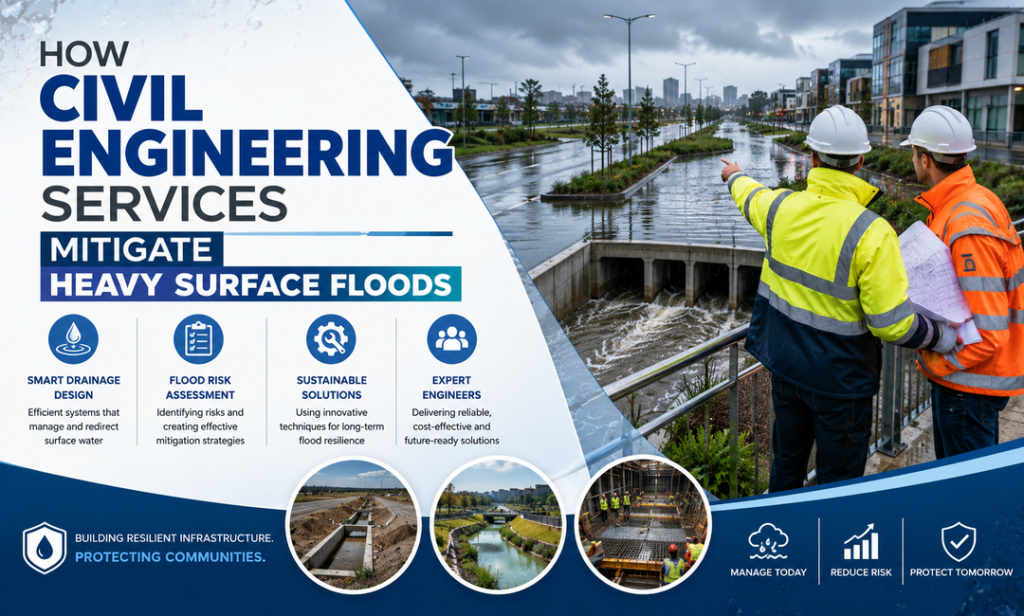
Smart site development is the process of planning and designing land to support safe, efficient, and sustainable construction. This involves looking at the site’s attributes, such as infrastructure needs, drainage, roads, environmental aspects, and so on, even before the actual construction takes place. Strategic planning at this stage helps identify potential challenges early, supports smoother planning approvals, improves project coordination, and creates a strong foundation for successful infrastructures.
Core Civil Engineering Services for Smart Site Development
Proper site development requires careful planning and technical skills. Civil engineering service helps to develop a good design for your site, which takes into consideration such factors as highway construction, drainage, earthwork, flooding, and utilities, among others.
Highway Design for Safe and Efficient Access
A good infrastructure is the basis of any successful development. Engineers develop DMRB Compliant, Adoptable (Section 38) and Private Highways Design that meets planning requirements and is sustainable for future use. This also encompasses Junction Layouts (Section 278), 3D Modelling and Road Alignment, and Pavement Design to develop road networks that meet the site’s needs and future demands.
Traffic Assessment and Road Performance
It is important to understand the movement of vehicles through and around a site before construction starts. Engineers conduct a Traffic Impact Assessment to assess transport needs, and Swept Path Analysis helps larger vehicles manoeuvre safely. Road Safety Audits can be used to identify potential risks early, and Road Condition Surveys can be used to gather information for upgrades, maintenance planning, or to link new developments to existing infrastructure.
Design of Sustainable Drainage System
Good water management safeguards developments against flooding and drainage problems. Civil engineering teams prepare SuDS Design and Surface Water Management Plans to manage runoff responsibly. Catchment Analysis and Hydraulic Assessments provide detailed information to ensure drainage systems are sized and can accommodate rainfall and meet sustainable development goals.
Drainage Networks and Sewer Connections
Good drainage systems facilitate construction and site performance. Services include Sewer Connections (Section 106), Drainage Network Surveys, Adoptable (Section 104), and Private Foul and Surface Water Drainage Design. For those areas where mains drainage is not available, Package Treatment Plan Design provides an effective wastewater solution that meets the site’s specific needs.
Flood Risk and Watercourse Planning
Assessments are required in detail before approval for developments near flood-prone areas. Engineers carry out Flood Risk Assessments and River Modelling to gain an understanding of potential risks and make recommendations for mitigation. Moreover, the top planning Permission Drainage Consultancy also supports planning applications by demonstrating that drainage proposals comply with local authority requirements.
Earthworks and Ground Modelling
Proper land preparation can enhance construction productivity and minimize excess material handling. Cut and Fill Assessments determine the earthwork quantities, and Site Level Design determines the finished ground levels, incorporating roads, drainage, and building platforms into a single site design.
Utility Coordination and Infrastructure Planning
Underground services are all essential for modern developments. Civil engineering teams deliver Service Ducting Design and Trenching layouts that integrate utilities effectively. Where existing infrastructure conflicts with proposed works, Build Over and Diversions (Section 185) help accommodate all the top services while supporting uninterrupted development.
Integrated Engineering for Smarter Development
A more efficient project is achieved when highway, drainage, flood management, earthworks, and utility coordination are all designed as a single coordinated project. This holistic approach minimises design conflicts, facilitates planning approval, enhances construction sequencing, and enables the creation of smart site development plans that are viable, sustainable, and future-proof.
Tips for Choosing the Right Civil Engineering Partner
A good civil engineering partnership can help make sure projects go smoothly and according to the rules. Here is what you should consider when choosing one.
- Evaluate Industry Experience: Select a civil engineering company that has a proven track record in both residential, commercial, industrial, and infrastructure projects. A diverse portfolio is a testament to the capacity to meet the needs of various sites, planning needs, and engineering challenges, and to provide practical solutions at each phase of development.
- Look for Service Capabilities: An integrated service provider, such as a firm that designs highways, assesses flood risk, plans earthworks, and coordinates utilities, can help to facilitate communication and project management. A good approach also minimizes the need for multiple consultants to coordinate.
- Evaluate Planning and Regulatory Knowledge: A competent engineering partner should be familiar with local planning policies, design standards, and statutory requirements. Having a good understanding of approvals, technical submissions, and regulatory processes can assist in facilitating smoother planning applications and reducing the likelihood of delays in project delivery.
- Consider Their Use of Modern Engineering Technology: Companies that use sophisticated design software, 3D modelling and engineering analysis can create more precise site layouts and uncover problems before construction starts. This helps to facilitate collaboration and enhance project efficiency.
- Prioritise Communication and Long-Term Support: Choose a civil engineering company that understands the importance of communication and teamwork with clients, architects, contractors, and planning agencies. Continuous technical support during design and construction ensures projects stay coordinated, adaptable to changes, and aligned with the development goals.
Final Words
To sum up, successful development projects begin with proper planning and engineering expertise. The services provided by civil engineering professionals play a key role in solving problems on the sites, handling the infrastructural needs of the project, and ensuring compliance with regulations right from the beginning stages of the projects. Investing in professional civil engineering support helps create strong foundations for projects that are practical and prepared for long-term success.


Great content! Keep up the good work!