Future Trends Shaping Modern Drainage Design Layout Practices
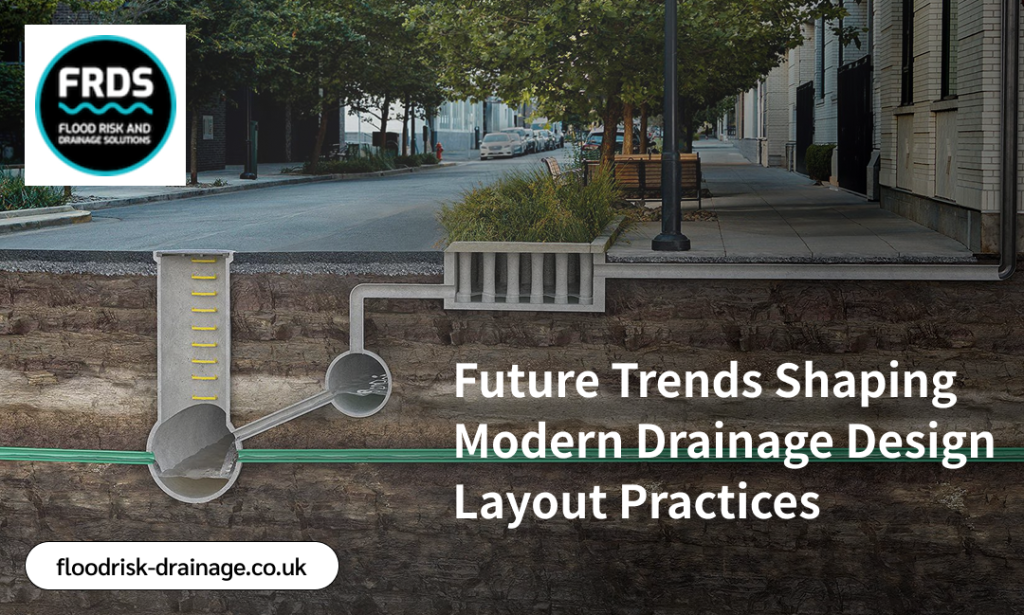
Urbanisation, climate change, and the need for infrastructure have led to a new approach to drainage design. As cities expand rapidly, it has become even more critical to develop future-proof ideas to ensure they continue to function efficiently. A contemporary Drainage Design Layout should be able to accommodate increasing rainfall, strict guidelines, and the sustainable development of buildings. Thus, following UK Drainage design principles will help ensure your drainage system is up to date and efficient.
Risk Management Strategies in Modern Drainage Planning
Effective risk management is essential in modern drainage planning to protect properties and infrastructure. It can help prevent flooding, reduce expenses and ensure long-term reliability in variable environmental conditions.
Identifying Potential Flood Risks Early
A good flood management strategy involves identifying potential flood sources at each site before development work begins. This can be done through a Drainage Design Layout that considers rainfall volumes, elevation levels, and other water bodies to mitigate risks. The use of SuDS drainage enhances the effectiveness of the whole drainage system by limiting water flows.
Accurate Site Evaluation and Soils Testing
Proper site evaluation and soil testing are important for developing an effective Drainage Design Layout to create a robust drainage system. It allows the engineer to determine the correct SuDS Drainage elements to use. Moreover, this will allow the drainage system to properly move water away from the construction, reducing the risk of erosion, subsidence, and costly future repairs.
Drainage Design for Extreme Weather Conditions
Rapid development increases pressure on existing infrastructure, making adaptable planning essential. Weather changes call for a Drainage Design Layout that can withstand heavy rainfall and storms. By applying SuDS Drainage techniques such as attenuation tanks and porous surfaces, the Drainage System is better able to cope with pressures that could cause it to overflow. This will ensure the system remains reliable in emergencies.
Prevention and Monitoring Programs
Risk mitigation in the long run requires regular checking and proper maintenance. Having a good Drainage Design Layout will facilitate easy inspection and maintenance, as the inspection locations and water flow paths are clearly indicated. The integration of monitoring devices with SuDS Drainage ensures that the Drainage System operates effectively, free from obstructions, thereby extending its service life.
Regulation Compliance and Future Preparedness
Regulatory compliance is critical to ensuring the sustainability of infrastructure construction. A regulated drainage design layout complies with government guidelines. Smart sensors integrated with SuDS Drainage features help identify early warning signs of overflow or blockage. An expansion-ready drainage system will be installed to accommodate any future changes to the urban environment.
Latest Developments Driving the Future of Drainage Design Layout
Innovations and sustainability have changed the approach to designing modern water systems. Changing technology and attitudes toward the environment are driving changes across all drainage design layouts, helping UK Drainage schemes become more sustainable.
Smart Monitoring and Predictive Analysis
With the digital revolution, professionals are adopting new approaches to Drainage Design Layout, especially in smart, sustainable design. Moreover, today’s professionals can monitor water levels, rainfall, and system performance with real-time insights using advanced monitoring, sensors, cloud-based computing and analysis tools. Such an application ensures that UK Drainage standards are met by promptly identifying blockages, leaks, and other related issues. Therefore, sustainable drainage systems can further complement this technology.
Nature-Based Solutions and Green Infrastructure
Green infrastructure is emerging as an integral part of contemporary Drainage Design Layout schemes. The implementation of rain gardens, green roofs, swales, and permeable paving is being considered to comply with UK drainage policies. Nature-based interventions facilitate runoff reduction, groundwater recharge and improved biodiversity in urban settings. The use of Sustainable Drainage System elements decreases pressure on conventional piped systems by ensuring positive environmental impacts. This approach addresses climate change and offers attractive, ecologically sound solutions for effective water management.
Innovative Materials and Construction Techniques
Materials innovations will increase efficiency and reliability in all Drainage Design Layouts. Pipes resistant to corrosion, lighter materials, and modules make up the drainage system that can be installed quickly at low cost. They contribute to meeting the increasing standards of UK Drainage with additional capability for future growth. Prefabrication of parts increases the efficiency of the building process while maintaining high-quality products. In combination with the concept of Sustainable Drainage, they enable the creation of durable and efficient systems.
Resilient Drainage Design Layout and Flood Adaptation
Adverse climatic conditions are driving the adoption of resilient Drainage Design Layout solutions to cope with heavy rains and high flood levels. Resilient drainage design aligns with current United Kingdom drainage regulations by using larger systems and overflow facilities. Utilizing sustainable drainage solutions, such as attenuation tanks and retention ponds, reduces peak flow rate stress. Adopting future climate scenarios ensures efficient drainage system performance, safeguards assets, and minimizes disruption from adverse climatic conditions.
Digital Modeling, BIM and Future Compliance Standards
The use of digital modeling software is revolutionizing the design of drainage layout. Using BIM and modeling software, engineers can understand water flows, identify potential hazards, and maximize efficiency before construction begins. The use of digital modeling software will ensure alignment with changes in UK Drainage legislation and environmental laws. Capturing and reusing water reduces demand on public supplies while improving resilience during dry periods. Incorporating Sustainable Drainage into the design process will enhance effectiveness and save time by minimizing alterations later.
Community-Oriented and Multi-Purpose Design
The planning process includes factors that would make a Drainage Design Layout advantageous for other purposes beyond water management. Public areas for recreation and landscapes are designed to incorporate sustainable characteristics while still meeting UK Drainage goals. Such an approach will increase safety while improving the appearance of the city or region and making life more comfortable. Using recycled materials and energy-efficient construction methods supports evolving standards. So, the multi-purpose use of the land is more productive.
Final Words
To sum up, emerging trends indicate an increasing demand for smarter, more sustainable, and more robust technologies in modern water management practices. Innovation is key to enhancing the effectiveness and reliability of all Drainage Systems to help the project keep up with ever-changing environmental requirements. Implementation of Sustainable Drainage Systems will help the system operate effectively while remaining environmentally friendly and protecting the property.