Drainage Strategy for Planning: How to Address UK Flood Risks
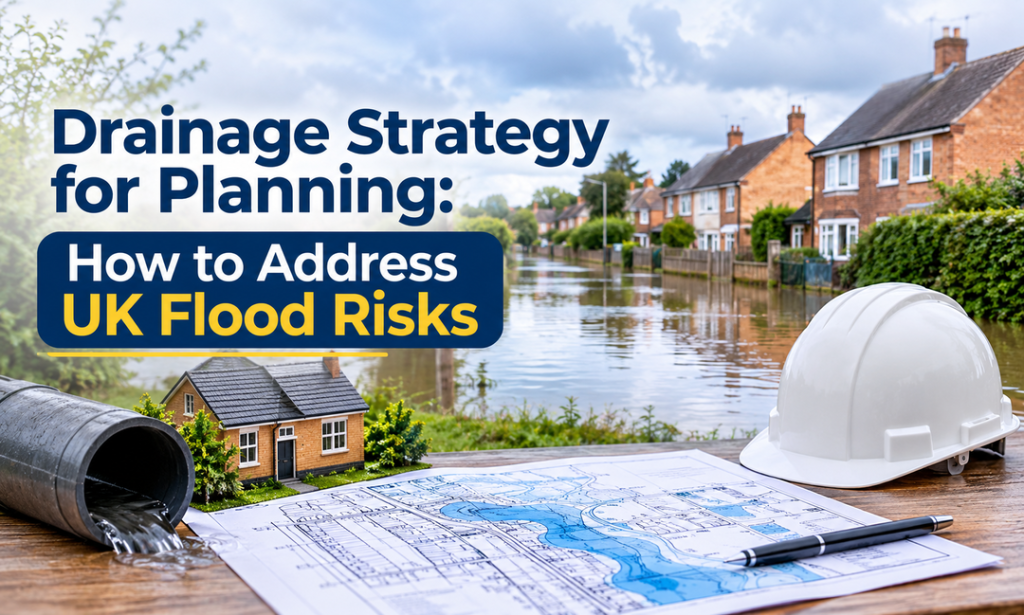
Before starting a development project, understanding how water moves across and around a site is essential. A drainage strategy for planning provides the technical information necessary to deal with runoff, drainage capacity and potential flooding. It also helps determine suitable drainage arrangements in line with local planning policies. Developers can develop a clear drainage strategy to help them meet environmental concerns and to provide information to the planning approval process.
What Is a Drainage Strategy for Planning and Why Is It Important?
A drainage strategy for planning is a plan for managing surface water and wastewater during and after development. Developers can use this to determine drainage needs, manage runoff and reduce potential flood risks. It also assists with planning applications by showing how proposed drainage arrangements comply with relevant UK standards and environmental expectations.
- Recognizes the current drainage conditions and site constraints.
- Explains how surface water will be collected and discharged.
- Provides vital information for preparing a flood risk assessment for planning.
- Helps prevent waterlogging and uncontrolled runoff.
- Demonstrates compliance with relevant drainage requirements.
Key Elements of a Drainage Strategy for Planning Approval
A good drainage plan should give clear information on the management of water during a development. These elements contribute to addressing planning needs:
- Existing Site Conditions: Review the existing drainage, ground levels, soil conditions and watercourses on site. This information is used to determine possible drainage limitations prior to construction.
- Surface Water Management: Explain how rainwater will be collected, stored and discharged. Soakaways, permeable paving and attenuation systems to control runoff are suitable solutions.
- Foul Water Drainage: Specify how wastewater will be handled, including proposed sewer connections or alternative treatment where necessary.
- Flood Risk Considerations: Add relevant flood risk information and describe the proposed actions to minimize surface water accumulation and property protection.
- Environmental Compliance: Ensure the drainage strategy considers water quality and environmental protection requirements. The Environment Agency may need to review proposals that affect nearby rivers, groundwater or other protected water bodies.
How Does the Water Framework Directive Affect Drainage Planning?
The Water Framework Directive (WFD) establishes legal standards for protecting rivers, lakes, estuaries, coastal waters and groundwater across England and Wales. Introduced in 2000, it requires every water body to achieve good status and prevents any deterioration in its existing condition. Its requirements remain part of UK law under the Water Environment (Water Framework Directive) Regulations 2017.
For development projects near watercourses, the directive influences drainage arrangements, wastewater discharges and construction activities. Planning authorities must consider relevant river basin management plans, while the Environment Agency advises on proposals that could affect water quality. A drainage strategy should provide evidence of how runoff and wastewater will be managed without harming nearby water bodies.
The Role of Sustainable Drainage Systems in Flood Prevention
These systems delay the entry of excess water into drains, promote natural infiltration and alleviate pressure on existing drainage systems. They have made significant contributions to flood prevention in the following ways:
1. Controlling Surface Water Runoff
Sustainable Drainage Systems manage rainwater close to where it falls. Permeable paving, swales and rain gardens let water percolate into the ground or flow through designated drainage channels. This decreases the amount of water that runs off hard surfaces during heavy rain.
2. Reducing Pressure on Drainage Networks
Excessive rain can lead to flooding of traditional drainage systems, resulting in waterlogging on roads and properties. Excess rainwater is temporarily stored in attenuation tanks, ponds and underground storage systems before being discharged at a controlled rate.
3. Enhancing Natural Water Infiltration
Sustainable Drainage Systems (SuDS) help manage the rainwater by controlling how it flows across the developed areas. Soakaways and the permeable surfaces allow rainwater to percolate into the ground instead of pooling on the surface. This aids in recharging groundwater and mitigates localized flooding when conditions are favorable.
4. Supporting Development Planning
A flood risk assessment for planning can be used to identify areas where surface water accumulates and other sources of flooding. The results can inform the choice and placement of appropriate SuDS features to address site-specific risks.
5. Separate Surface Water and Wastewater
Where appropriate, effective drainage design ensures rainwater and wastewater management arrangements are kept separate. A foul drainage strategy for planning outlines the collection, treatment and discharge of foul drainage, to minimise the risk of drainage issues and to protect water resources in the vicinity.
What Common Drainage Planning Issues Can Delay Approval?
Inadequate technical information that does not consider site-specific needs can delay planning decisions related to drainage issues. Common issues include:
- Incomplete Drainage Reports: If calculations are missing, site surveys or drainage layouts are missing, it can be difficult for planning authorities to assess proposed arrangements.
- Lack of Flood Risk Information: If the sources of flooding are not identified or appropriate mitigation measures are not provided, objections may be raised.
- Poor Surface Water Management: Drainage designs that do not control runoff or take account of existing watercourses can cause concern.
- Unclear Foul Drainage Arrangements: Lack of information regarding sewer connections, wastewater treatment or discharge arrangements can cause delays in decision-making.
- Environmental Compliance Issues: Proposals that do not take account of water quality standards or Environment Agency requirements may require further assessment or changes.
Final Words
To sum up, flood risk assessment for planning is used to identify potential hazards and to decide on appropriate measures to protect the site. Likewise, a foul drainage strategy for planning will ensure that wastewater is dealt with appropriately. Meeting these needs early enables developers to prepare compliant proposals, minimise planning issues and facilitate sustainable development throughout the UK.
Frequently Asked Questions
What Factors Affect the Cost of a Drainage Strategy?
The cost will vary based on the size of the site, type of development, total drainage requirements and technical evaluations necessary.
How Long Does It Take to Prepare a Drainage Strategy?
Preparation time varies depending on site surveys, drainage calculations and the complexity of the proposed development.
Can Planning Permission Be Refused Without a Drainage Strategy?
Yes, if drainage information is required but missing or inadequate, planning authorities may refuse or delay an application.
Who Can Prepare a Drainage Strategy for Planning?
A qualified drainage engineer or specialist consultant can assess site conditions and prepare the necessary documentation.
Can an Existing Drainage Strategy Be Updated?
Yes, it can be revised when development layouts, site conditions or drainage requirements change.