Flood Risk Assessment Services to Assess Flood Issues Early
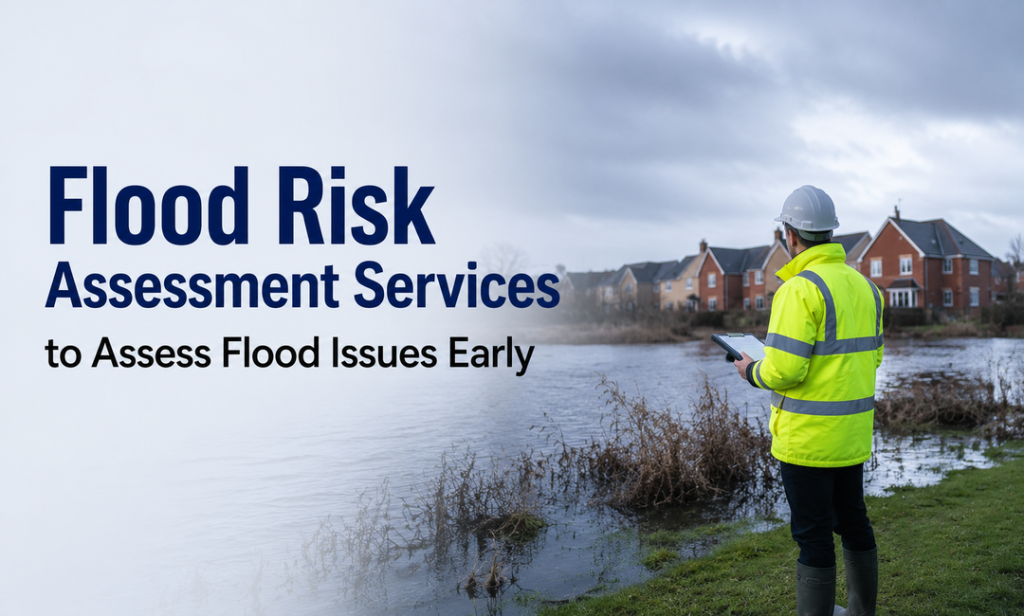
Early assessment helps identify all the potential flooding issues before they affect a development. Flood risk assessment services include investigations into potential sources of flooding, drainage and vulnerability of the land. These findings help planners understand risks and consider suitable mitigation measures at an early stage. By conducting flood risk assessments before construction begins, developers can make informed decisions, improve drainage planning, support compliance, and create safer spaces for future use.
How Flood Risk Assessment Services Help Manage Flood Challenges
Dealing with issues that come from floods needs planning and knowledge of possible risks associated with water. Proper flood risk assessment services will be conducted to determine which places are vulnerable and what the drainage system is like, and therefore which actions should be taken.
- Identify Potential Flood Sources: A professional flood risk assessments will determine the potential sources of flooding such as rivers, surface water, groundwater, and drainage systems. This assists developers in knowing the weaknesses of the site before construction. Early identification enables planning decisions and consideration of flood mitigation measures.
- Understand Existing Drainage Conditions: A review of UK Drainage conditions can help to identify the current movement of water across and around a site. Experts can determine existing drainage routes, watercourses and potential capacity issues. This information can be used to improve planning and minimise potential surface water management issues during development.
- Support Effective Drainage Planning: A Drainage Design Layout provides a detailed layout of proposed drainage routes, discharge points, storage areas and other infrastructure. It assists in coordinating drainage systems with the development plan. Good planning can help to enhance water management, minimise potential conflicts and facilitate implementation during construction.
- Encourage Sustainable Development: Early flood planning helps to ensure responsible water management and more resilient development. Assessment results can inform practical solutions and project planning considerations. Moreover, the drainage assessment can be taken into account from the outset, enabling developers to design sites that are effective in managing water and will contribute to long-term environmental performance.
Role of Drainage in Flood Risk Management
Proper drainage is an important part of flood risk management, as it helps to manage and direct surface water efficiently. A detailed drainage assessment can be used to determine the existing drainage conditions, possible flow paths and areas that need improvement.
Knowing the UK Drainage requirements can also help with appropriate planning and compliance. In the meantime, SuDS Drainage can help to manage water sustainably by slowing the flow of water, increasing storage and alleviating the strain on existing drainage systems during heavy rain.
- Manage Surface Water: Controls rainwater runoff and minimizes water accumulation on all the development sites.
- Enhance Drainage Capacity: Supports systems that can accommodate more rain and fluctuating water levels.
- Protect Properties: Assists in directing water away from buildings, roads and other critical infrastructure.
- Support Sustainable Planning: Promotes practical solutions that consider development and responsible water use.
- Enhance Flood Resilience: Supports development to be resilient to heavy rainfall and reduce potential disruption.
Tips for Choosing the Right Flood Risk Assessment Services
The selection of appropriate flood risk assessment services can have an impact on the quality of planning and flood management for a development. Before choosing a professional service provider, take these factors into account.
Check Relevant Technical Experience
Look for professionals with experience in assessing different types of flood risks and development sites. They should be familiar with surface water, groundwater, rivers and existing drainage conditions. Knowledge of UK Drainage requirements can also assist in ensuring that relevant standards, planning expectations and local drainage circumstances are taken into account. A competent team can easily spot issues and offer practical solutions that are appropriate for the project.
Review Their Approach to Drainage Planning
A good provider should be aware of how the drainage infrastructure relates to the broader development. Inquire if they will check proposed drainage routes, discharge points, storage areas, and other features. A detailed Drainage Design Layout can be used to illustrate the flow of water through the site. This information can be used to facilitate improved coordination of drainage proposals, site layouts, and flood management measures.
Consider Their Knowledge of Sustainable Solutions
Sustainable water management should be an important consideration when selecting an assessment provider. Inquire about their experience with SuDS Drainage and other methods that can manage rainfall runoff. These solutions may include attenuation, infiltration, permeable surfaces and controlled discharge. Providers who have appropriate experience can assist in determining practical solutions that will meet drainage needs while addressing environmental and development needs.
Understand What the Assessment Covers
When selecting a provider, make sure to review the extent of their drainage evaluation. It should take into account the relevant flood sources, existing drainage conditions, surface water pathways and potential impacts on the proposed development. Identified risks and recommended drainage assessment measures can be better understood through clear documentation. Ensure the provider communicates their results in a clear manner and meets your site’s needs.
Compare Service Quality and Project Support
Last but not least, take into account communication, reporting quality, project experience, and support. A competent provider of flood risk assessments will be able to communicate technical findings clearly and answer questions specific to the project. Before deciding, compare previous work, expected deliverables, timelines and costs. Selecting a team with both technical expertise and hands-on advice can help to make flood risk planning more structured and manageable.
Final Words
To sum up, a good drainage assessment contributes to sustainable projects in terms of safety and sustainability through the identification of drainage issues prior to project development. Incorporating SuDS Drainage solutions can support controlled water management while reducing pressure on existing drainage systems. These measures help developers make decisions, improve site resilience, meet planning requirements and create sites that manage water responsibly over the long term.