Highway Drainage Design in Manchester That Prevents Floods
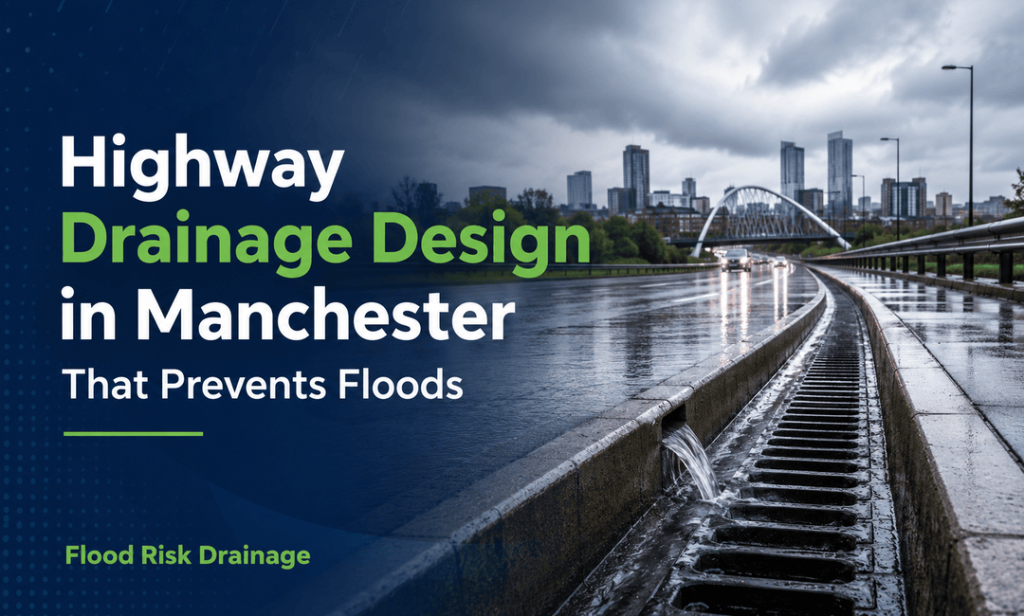
Heavy rainfall and recurring storms in Manchester can place pressure on road infrastructure. Without the best drainage systems, highways may experience flooding, standing water and deterioration of the road foundation. These problems can lead to hazardous driving conditions, increased maintenance requirements, and costly repairs.
Designing effective drainage for highways will help deal with surface water in order to mitigate its possible damaging effects. Experts design drainage systems for highways that conform to the prevailing weather patterns in the area and engineering guidelines. With the knowledge of drainage engineering, highways will be safer and last much longer.
How Our Expert Highway Drainage Systems Prevent Flooding
The importance of having effective drainage on highways cannot be overstated since it helps minimize floods and protect the roads from damage while maintaining safety for all road users. Effective drainage can be achieved through planning, analysis, and design.
Thorough Site Assessment and Surveys
A thorough site evaluation is the first step in any effective drainage system. Flood risks can be identified early by assessing the terrain, water flow patterns, soil conditions and existing infrastructure. Precise surveys are essential for creating drainage solutions that effectively manage surface water and minimize flood risks.
Bespoke Drainage Designs
No two projects are exactly alike. Specific site needs are met by designing drainage for each site to collect, convey and discharge water effectively. However, special solutions are provided to avoid water accumulation on highways and damage to surrounding infrastructure.
Residential and Commercial Drainage Planning
The needs of residential and commercial developments near highway networks are taken into account in comprehensive drainage planning. When the surrounding areas are well connected to the drainage system, this helps to control runoff and alleviate the strain on road drains during heavy rain.
Flood Assessment and Mitigation
Flood assessments can be used to determine vulnerable areas and potential water management issues. The mitigation measures can then be integrated into the drainage design by reducing the risk of flooding and making highways more resilient in the face of extreme weather.
Long-Term Protection and Compliance
A well-designed highway drainage system will help to ensure long-term road performance by minimizing erosion, safeguarding road foundations and providing safe driving conditions. Industry standards and best practices help ensure drainage infrastructure is effective and able to meet future environmental challenges.
From Start to Finish: Our Highway Drainage Design Process
The development of a highway drainage plan is necessary in the construction of a good drainage system that will ensure safety and longevity for the drainage system. Every step from the beginning till the end plays a crucial role in the creation of the drainage system.
Site Survey
The first step in any successful drainage of highways involves conducting a thorough site survey. In collaboration with all the key stakeholders, design engineers evaluate the terrain of the site as well as its soil characteristics and rainfall trends. This process identifies areas of concern and advantages of the location as far as the drainage is concerned. Moreover, having all this information early on allows for designing a drainage system that will meet the requirements of that particular location.
Drainage System Selection
After the site analysis phase, the most suitable system of drainage is then selected in accordance with the needs of the particular project and environmental factors that may be present. Various options, materials, and components used to build and install a drainage system are analyzed before settling on one that will work best in that particular environment. Efficiency, effectiveness in flood mitigation, and reliability are some of the benefits of making the right choice here.
Designing and Planning
The designing and planning phase entails transforming the information obtained from surveys, together with the specifications of the projects, into a viable drainage system. However, computer models and software tools are applied in creating effective designs that will help in reducing water runoff and safeguarding the road structure. All features of the design are critically examined to ensure that they comply with industry standards and highway drainage specifications.
Documentation and Approval
Once the design is completed, documentation is provided in order to facilitate the approval process. Reports include designs, hydraulic calculations, and other information necessary for the approval procedure. The goal of extensive documentation is to prove that the drainage solution being proposed complies with all existing regulations and has been developed in accordance with the guidelines. Extensive documentation is important not only for securing approvals but also for ensuring proper coordination.
Why We Are a Trusted Choice for Highway Drainage Design
The choice of the appropriate highway drainage team is very important when you want to have safe, efficient, and durable drainage systems. Expertise, reliability, and a commitment to quality all contribute to successful long-term drainage solutions.
Extensive Project Experience
Successful completion of highway drainage projects shows the capacity to overcome a variety of challenges. The knowledge and expertise developed in the implementation of complex schemes ensure that the drainage solutions are practical, efficient and reliable and meet both technical and regulatory requirements.
Qualified and Experienced Professionals
Highway drainage design requires specialist knowledge and attention to detail. Professional engineers and designers with extensive experience in drainage design and implementation can provide invaluable expertise to every project, ensuring drainage systems are well-planned, accurately designed and able to function effectively in challenging environments.
Tailored Design Solutions
Each site has its own particular problems, and so drainage systems need to be designed to meet the project requirements. Moreover, customized solutions consider site conditions, water flow patterns, environmental factors and compliance requirements to provide more efficient and effective drainage performance.
Transparent and Cost-Effective Service
Clients are kept in the loop with clear communication and transparent pricing, enabling them to make good decisions throughout the project. Cost-effective design prioritizes providing value while maintaining quality, safety and long-term functionality in drainage solutions.
Commitment to Long-Term Performance
Effective drainage systems are designed with durability in mind. With a focus on good design and thoughtful planning, drainage infrastructure can operate for years without requiring much maintenance. This long-term strategy will help safeguard road networks, enhance safety and contribute to the development of resilient infrastructure.
Final Words
In conclusion, effective highway drainage design is essential for protecting Manchester’s road network from the impacts of heavy rainfall and surface water flooding. Highway drainage plays an important role in enhancing safety on roads, increasing the longevity of roads and minimizing the costs associated with maintenance work. In addition, by considering environmental factors and adopting appropriate engineering practices, good highway drainage designs would promote efficient transport services.