Flood Risk Assessments
A Flood Risk Assessment (FRA) is a technical analysis conducted to evaluate the potential flooding hazards in a specific area and assess the impact of proposed developments on flood risk. An effective FRA identifies all potential flooding sources including:
- Rivers and streams (fluvial flooding)
- Surface water runoff (pluvial flooding)
- Groundwater
- Coastal and tidal waters
- Sewers and drainage systems
The assessment evaluates flooding probability by analysing factors such as extent, depth, and velocity, while also considering climate change projections. A comprehensive FRA determines how a proposed development might affect existing flood patterns and recommends appropriate mitigation measures to reduce flood risk both on-site and in surrounding areas.
Non Adoptable Waste Water Treatment
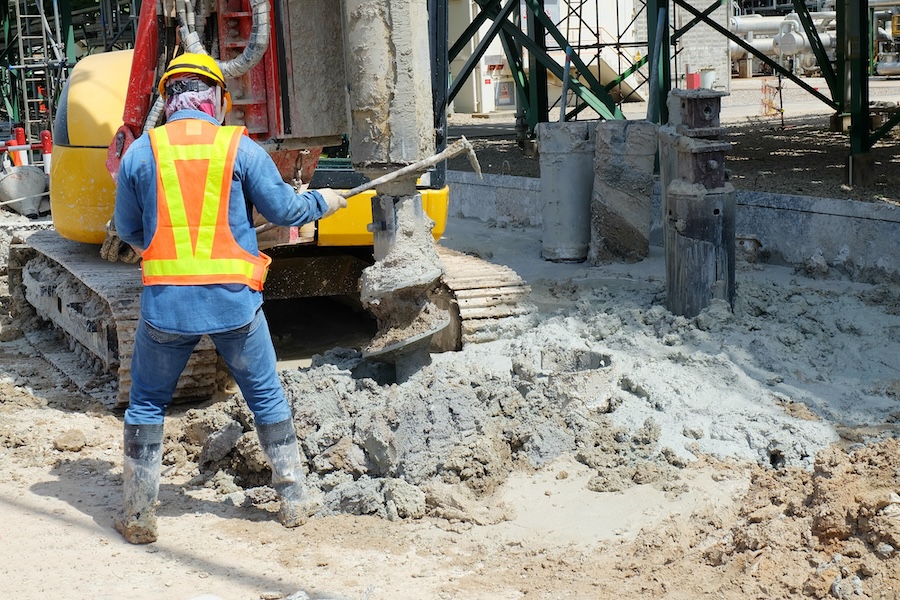
“Non-adoptable” wastewater treatment refers to private, off-mains drainage systems that are not owned or maintained by a public water and sewerage company. The owner is fully responsible for its operation and maintenance.
Types of Non-Adoptable Wastewater Treatment Systems
These systems are typically used for single properties, small communities, or developments where connecting to the public sewer is not feasible.
- Septic Tanks: These are the most common off-mains systems. They collect sewage and allow the solids to settle, while the liquid waste (effluent) partially treats in a drainage field (soakaway). They require regular emptying by a tanker and maintenance by the owner.
- Package Treatment Plants: These systems provide a more advanced level of treatment than septic tanks, using biological and sometimes chemical processes to produce a cleaner effluent that can often be discharged into a watercourse (subject to an environmental permit from the relevant body like the Environment Agency or Natural Resources Wales).
- Cesspools/Cesspits: These are sealed underground holding tanks with no outlet. All wastewater is collected and stored until it needs to be professionally emptied by a tanker.
- Sustainable Drainage Systems (SuDS): Certain SuDS components used for surface water drainage may not be adoptable by a sewerage company, requiring another body (like a local authority) or the owner to maintain them in perpetuity.
Suds Drainage Designs
SuDS (Sustainable Drainage Systems) drainage designs are environmentally-friendly systems that mimic natural drainage to manage surface water by using techniques like infiltration, detention, and conveyance. They are designed to slow water flow, reduce runoff volume, improve water quality through natural filtration, and enhance biodiversity and green spaces. Examples of SuDS features include rain gardens, permeable paving, green roofs, swales, and detention basins.
Key principles and components of SuDS designs
- Mimic natural processes: SuDS manage water locally by using natural processes like infiltration, slowing down runoff, and allowing water to be stored and treated by vegetation.
- Manage water at the source: A key principle is to deal with surface water as close to where it falls as possible to reduce the burden on traditional drainage networks.
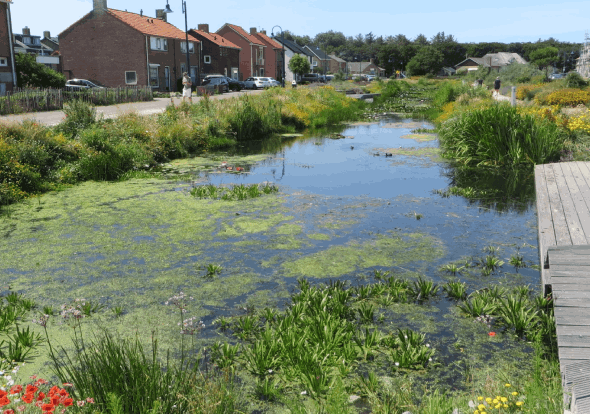
- Employ the “SuDS management train”: This approach uses a sequence of techniques to manage water quantity and quality. It moves water through different features, from source control to conveyance and then storage, before it is released.
Common SuDS features
- Infiltration systems: Allow water to soak into the ground. Examples include infiltration trenches, soakaways, and permeable paving.
- Source control: Intercept and manage water at its point of origin. This includes features like green roofs and rain gardens.
- Conveyance systems: Transport water in a managed way, often through features designed to slow it down. Examples include swales and filter trenches.
- Storage and treatment features: Hold water temporarily and allow pollutants to settle or be filtered out. Examples include ponds, wetlands, and detention basins.
Benefits of SuDS designs
- Flood reduction: They help control the volume and speed of rainwater, reducing the risk of flooding.
- Improved water quality: Natural materials and vegetation filter out pollutants, improving the quality of water that re-enters natural watercourses.
- Enhanced biodiversity: Features like ponds and wetlands provide habitats for wildlife in urban areas.
- Creation of green spaces: SuDS can be integrated into the landscape to create attractive and multifunctional spaces for recreation and aesthetic improvement.
- Groundwater recharge: By allowing water to soak into the ground, SuDS help replenish groundwater supplies.
Property Level Protection
Property level flood protection (PLP) or property flood resilience (PFR) involves making modifications to a building to reduce its vulnerability to flooding and speed up recovery if water enters. It includes resistance measures to prevent water from getting in, like flood doors and air brick covers, and recoverability measures to minimize damage and speed up cleanup, such as raising electrical sockets and using water-resistant building materials.
Sequential/exceptions Tests
The sequential and exception tests are a process in planning to steer development away from flood-risk areas. The sequential test compares the development site with other available sites to find the one with the lowest flood risk. If no suitable sites with lower flood risk are available, the exception test is applied. It requires the development to demonstrate that it is safe over its lifetime, will not increase flood risk elsewhere, and has sustainability benefits that outweigh the flood risk.
Sequential Test
Purpose: To ensure that development happens in areas with little to no flood risk (Flood Zone 1) whenever possible.
Process :
- Compares the proposed development site with other available sites to find those with the lowest flood risk.
- If a suitable site with a lower flood risk is found, the development must be moved there.
- When it applies: When a development is proposed in a medium or high-risk flood zone (Flood Zones 2 or 3).
Exception Test
Purpose: To allow development in medium or high-risk flood zones only when it’s absolutely necessary and safe.
Process:
- Can only be applied after the sequential test has shown that no suitable lower-risk sites are available.
- Must prove the development will be safe for its entire lifetime, considering all users.
- Must show the development will not increase flood risk for others.
- Must demonstrate that the project provides wider sustainability benefits to the community that outweigh the flood risk.
Support To Local Planning Authorities
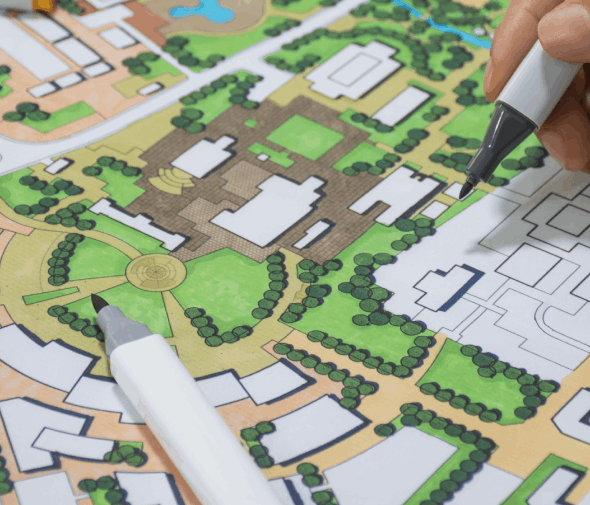
FRDS provides specialized services such as flood risk assessments, modeling, SuDS design, and technical advice to help local authorities manage complex schemes and meet regulatory requirements.
Services provided by flood risk consultancies
- Flood Risk Assessments (FRAs): These assessments evaluate the risk of flooding from various sources and are crucial for planning applications.
- Hydraulic and flood modeling: Consultants use sophisticated modeling to predict flood extents and consequences.
- Strategic assessments: They offer broader strategic assessments and consequence analysis beyond individual sites.
- SuDS (Sustainable Drainage Systems): Many consultants provide design and reporting services for SuDS, which are essential for managing surface water.
- We offer specialized support to Local Flood Authorities (LLFAs) for technically assessing complex or challenging developments that impact ordinary watercourses or surface water flooding.
Flood Defence Consent
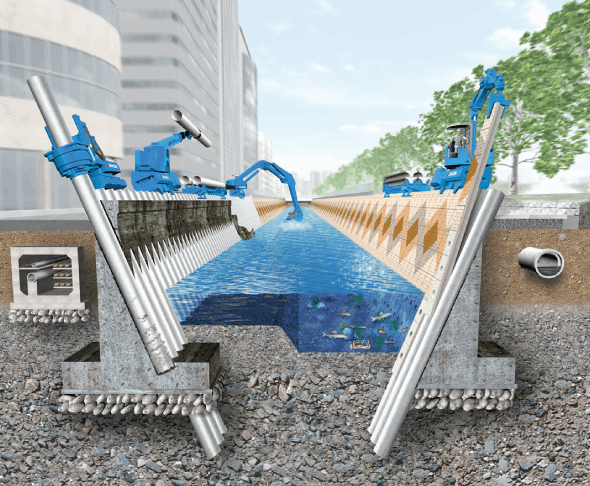
Flood defence consent is a permit required for works on or near watercourses that could affect the flow of water or increase flood risk. It ensures that activities like building a culvert, dam, or weir, or making alterations to existing structures, do not negatively impact flood prevention or cause environmental damage. Temporary works, such as scaffolding or sandbags used during construction, may also require consent.
What requires flood defence consent?
- Permanent or temporary works: Building or altering structures like mills, dams, weirs, or culverts in an “ordinary watercourse” (a watercourse that is not a main river).
- Temporary structures: Works such as scaffolding, cofferdams, or major drainage activities that are in a watercourse even if they are temporary.
- Works near flood defences: Any activity within 8 meters of a flood defence asset (or 16 meters for tidal defences).
- Changes to existing structures: Modifying existing obstructions like dams or weirs.
Why is it required?
- To prevent flooding: The primary purpose is to ensure that the works do not increase flood risk for others.
- To protect the environment: Consent helps prevent serious harm to the environment and nature conservation.
- To manage water flow: It ensures that works do not cause a serious detrimental impact on the drainage of an area.
Environmental Permits
Environmental permitting for watercourses is a regulatory process that requires a permit to conduct activities that could impact a river, stream, lake, or other water body, such as discharging wastewater or performing construction work. These permits are necessary to control pollution, prevent increased flood risk, and ensure that works do not harm the environment. They are issued by a regulatory body, like the Environment Agency, and set specific conditions that must be met.
Key aspects of environmental permitting for watercourses:
- Discharges: You need a permit to discharge treated wastewater, surface water runoff (especially from construction sites), or other liquids into a watercourse.
- Works near water: Permits are required for any work on, in, or near a main river, flood defence, or sea defence structure, as these activities can affect flood risk and drainage. This can include temporary or permanent construction.
- Flood risk: The permitting system is used to manage flood risk by ensuring that new projects, such as those on a floodplain, do not increase flood risk for others.
- Regulatory framework: In England and Wales, these activities are often covered under the Environmental Permitting (England and Wales) Regulations 2010 (EPRs), which consolidated existing permits like Flood Defence Consents.
- Exemptions: Certain very low-risk activities, such as de-silting up to a certain length of a man-made ditch, may be exempt or only require registration instead of a full permit.
Insurance Reports
A flood risk insurance report is a detailed assessment of a property’s likelihood of flooding, which helps insurance companies and potential buyers evaluate the risk and potential costs associated with that risk. The report includes details on the type and depth of potential flooding, flood defenses, and an insurance rating, and it helps property owners and buyers decide if they need to invest in flood resilience measures.
What a flood risk report includes:
- Risk assessment: It evaluates the risk of flooding from various sources, including rivers, the sea, surface water, and groundwater.
- Flood history and depth: It may provide information on past flooding events and the predicted depth of future floods.
- Flood defenses: It will include details on existing flood defenses and their effectiveness.
- Insurance rating: It provides an insurance rating based on the property’s flood risk.
- Maps: The report may include maps showing the property’s location relative to floodplains and other local features.
Why you need one:
- For buyers: A report is crucial when purchasing a property to understand the potential for future flooding and the associated costs, including insurance premiums and potential damage.
- For new construction: Developers need flood risk assessments to demonstrate how risks will be managed and to apply for planning permission.
- To reduce risk: If you already own a property, a report can help you identify risks and determine what flood resilience measures, like flood-proofing, are needed.
Drainage Strategies For Major Developments
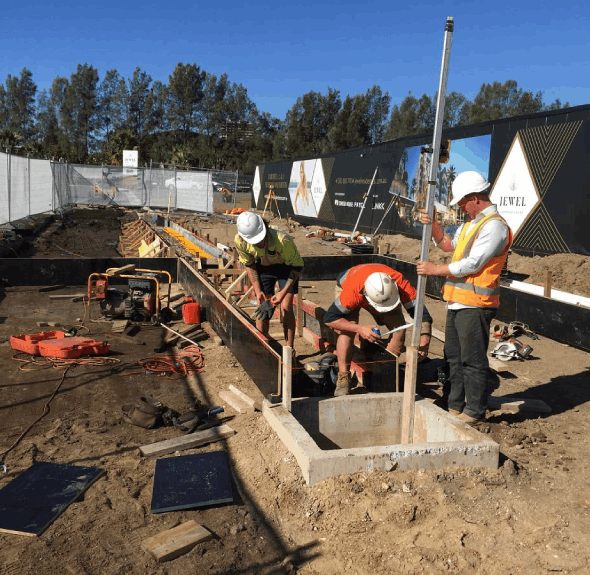
Drainage design for major developments (typically 10 or more dwellings or 1,000 sq m of non-residential development) in the UK centers on a Sustainable Drainage Strategy that uses Sustainable Drainage Systems (SuDS) to manage surface water runoff. The primary goal is to mimic natural drainage patterns, reduce flood risk, improve water quality, and provide environmental benefits.
Key Principles
- Mimic Natural Drainage: The system must manage water as close to where it falls as possible, using natural processes like infiltration and evapotranspiration.
- Manage Flood Risk: Post-development runoff rates and volumes should not exceed pre-development (greenfield) rates and volumes, even during heavy rainfall events (e.g., 1 in 100 year storms, with additional allowances for climate change).
- Improve Water Quality: SuDS features should filter pollutants and sediments from surface water runoff before it enters natural watercourses.
- Provide Multiple Benefits: The design should integrate with landscaping to offer amenity value and enhance biodiversity, creating green spaces and habitats for wildlife.
Percolation Testing
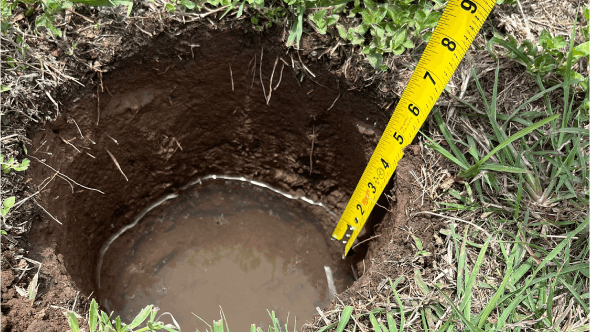
A percolation test, or “perc test,” measures how quickly water drains through the soil, which is a key factor in determining if a site is suitable for a septic system or soakaway. The test involves excavating a hole, filling it with water, and then timing how long it takes for the water level to drop to assess the soil’s drainage rate. A test that is too fast or too slow indicates that the soil may be unsuitable for a conventional drainage field.
What is a percolation test?
- It’s a test to measure the rate at which water is absorbed by the soil.
- It is essential for designing effective septic systems and soakaways, ensuring wastewater can be adequately filtered and dispersed into the ground without causing a backup or pollution.
Feasibility Assessments

A flood risk feasibility assessment is a study that evaluates whether a proposed development or a potential flood management scheme is possible, practical, and effective from a flood risk perspective. It combines the principles of a standard flood risk assessment with a broader analysis of technical, financial, and regulatory viability.
Purpose
- The primary purpose is to inform decision-making in the early stages of planning or project development by:
- Identifying Constraints: Determining potential site-specific risks and constraints related to flooding from all sources (rivers, sea, surface water, groundwater, etc.).
- Evaluating Solutions: Assessing a range of potential options to reduce or manage flood risk, such as new flood defences, changes in site layout, or Sustainable Drainage Systems (SuDS).
- Determining Viability: Evaluating if an option is technically sound, financially viable (e.g., securing funding), legally permissible, and acceptable to the community and stakeholders.
- Ensuring Safety & Compliance: Demonstrating that the proposed project will be safe for its entire lifetime, will not increase flood risk elsewhere, and complies with national and local planning policies.
Flood Storage Compensation
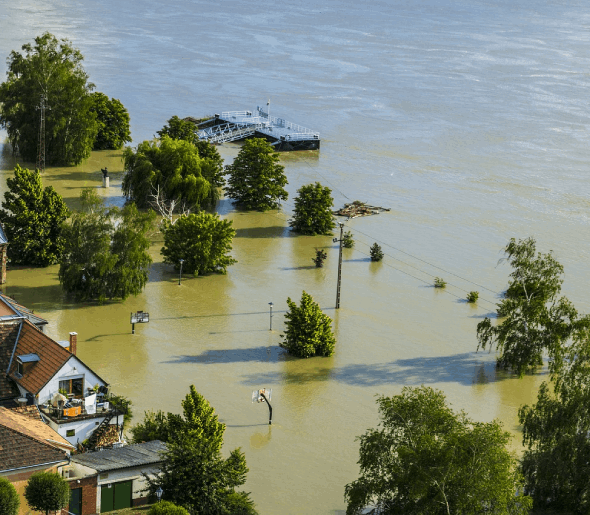
Flood storage compensation is a requirement for new developments in floodplains to replace the natural flood storage volume that is lost. It involves creating an equivalent or greater volume of flood storage elsewhere on or near the site to prevent increased flood risk in other areas. This is typically achieved through “level-for-level” compensation, where a part of the site is lowered to the same extent that another part is raised, maintaining the total storage capacity at all flood levels.
How it works
- Volume for volume: The total volume of water the new development displaces must be compensated for.
- Level for level: To maintain the same storage capacity at all flood levels, any land that is raised must be offset by an equal volume of land that is lowered at the same elevation.
- Compensatory storage area: The compensation area must be freely floodable and free-draining.
- Timing: The compensatory storage must be completed before the development that would displace flood water can begin.
Why it is important
- Prevents increased flood risk: By replacing lost storage, it ensures that the new development does not increase flood risk elsewhere.
- Maintains floodplain function: It preserves the natural function of the floodplain to store and manage flood water.
- Mitigates climate change impacts: Calculations for compensation often account for future climate change allowances to ensure the storage is sufficient for the development’s lifetime.
Detailed Drainage Design
Private drainage design is the process of planning and designing sewer systems that serve a single property or a small development, typically located within the property’s boundaries or on private land. This includes detailing the layout, pipe sizes, and construction specifics for systems that either connect to the public sewer or handle wastewater privately through methods like a septic tank or cesspit. The design must comply with building regulations, such as Part H in the UK, and often includes external works like finished floor levels for driveways and paths.
Key aspects of private drainage design
- System type: The design depends on whether the property is connected to the public sewer system or uses an “off-grid” solution.
- Connected to public sewer: The design will specify how pipes from the property connect to the public sewer network, often requiring approval from the local water authority.
- Private/off-grid system: For properties not connected to the main sewer, the design will focus on systems like septic tanks, cesspits, or sewage treatment plants. This requires detailed planning for tank size, location, and the associated land-based disposal of effluent, like a soakaway.
- Regulatory compliance: Designs must meet specific standards set by local building regulations (e.g., Part H in the UK) and may require approval from the relevant water authority and local building control.
Drainage Impact Assessments
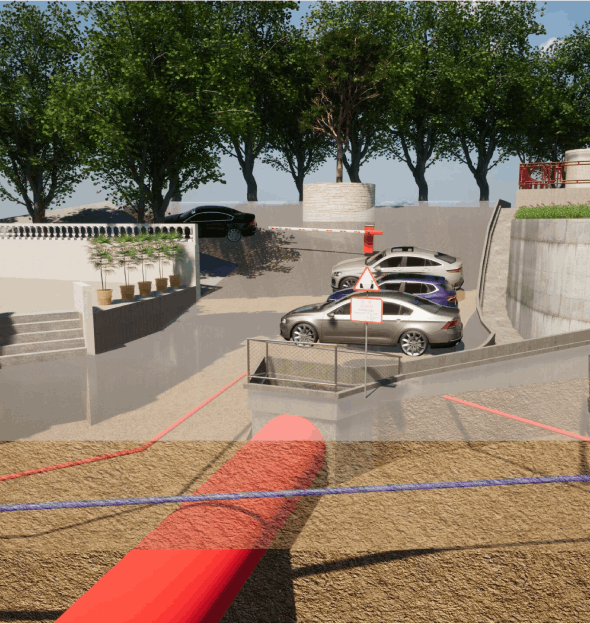
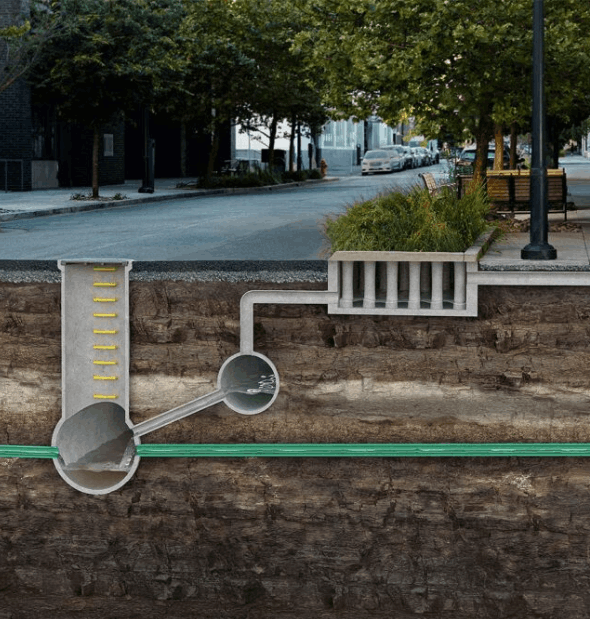
A drainage impact assessment (DIA) is a report that analyzes how a proposed development could affect a site’s drainage systems and the surrounding area, identifying potential problems and proposing solutions. It is required for projects that may cause issues like overwhelming public drains, increasing flood risk, or causing sewer overflows, and helps ensure development can connect safely to drainage networks. The assessment evaluates existing drainage, simulates storm events, and recommends mitigation strategies to prevent negative impacts.
Key aspects of a drainage impact assessment
- Analysis of existing systems: The report examines the current drainage infrastructure on and around the site.
- Identification of risks: It identifies potential problems caused by the new development, such as increased surface water runoff or a higher risk of flooding.
- Simulation of storm events: The assessment may include simulating how the site and its drainage will perform during severe weather conditions.
- Development of solutions: The DIA proposes specific drainage solutions and mitigation measures to manage water flow and prevent damage to the development or nearby properties.
- Connection approval: A major goal is to provide the necessary information to get approval for connecting to public drainage networks.
Business Continuity
A flood risk business continuity plan is a written document outlining the steps a business will take to survive, respond to, and recover from a flood, minimizing downtime and protecting critical functions. It identifies essential business processes, assesses potential impacts, and details procedures for keeping operations running, communicating with stakeholders, and ensuring employee safety.
Key components and actions
- Risk assessment: Identify flood risks and the potential business impacts, such as financial loss, operational disruption, and reputational damage.
- Preparedness: Take preventative measures, like moving equipment to higher ground, installing flood barriers, ensuring storm drains are clear, and storing chemicals properly.
- Response: Have a documented plan for immediate actions during a flood, such as shutting down non-essential equipment and evacuating the premises safely.
- Recovery: Outline the procedures for restoring operations. This includes steps for cleanup, restoring critical business functions, data recovery, and resuming normal operations as quickly as possible.
- Communication: Establish clear communication protocols for employees, customers, and suppliers to keep everyone informed during and after the event.
- Roles and responsibilities: Assign specific roles and responsibilities for executing the plan to ensure clear leadership during an emergency.
- Testing and training: Regularly test the plan to ensure it is effective and train staff on their specific roles and the overall process.
Sub-consultancy Services
FRDS provides sub-consultancy service currently for a number of businesses This is when a prime consultant hires another consultant (the sub-consultant) to perform part or all of the work for which the prime consultant is responsible to the client. This is often done because the prime consultant lacks the specific expertise or resources to complete the entire project themselves.
Soakaway Design
Soakaway design is the process of planning a subsurface drainage structure to manage surface water by temporarily storing it and then allowing it to infiltrate into the surrounding ground. It involves calculating the required volume based on the drained area and the ground’s infiltration rate, and choosing the appropriate structure, such as a pit filled with rubble or a modern system using plastic crates. Proper design is crucial to ensure the soakaway can discharge water quickly enough to handle future storms and prevent flooding.
Modelling
Drainage modelling is the process of using computer-based hydraulic models to simulate how water moves through both natural and man-made systems, such as urban pipe networks and surface runoff. This is done to analyze and predict issues like flooding, understand a system’s performance, assess the impact of changes, and design effective solutions to manage water.
What drainage modelling involves
- Simulating water flow: Models replicate how water, both from rainfall-runoff on surfaces and from within pipe networks, behaves under different conditions.
- Using various data: Engineers use a wide range of data, including topography, rainfall data, land use, and existing infrastructure details, to build and calibrate the models.
- Predicting outcomes: Models predict outcomes like flood levels, water depths, flow rates, and potential overflow points.
- Analyzing system performance: They provide insights into how well a drainage system is performing, its resilience to blockages or failures, and the consequences of additional flows.
- Supporting design and planning: Models are used to test and refine drainage system designs, ensuring they meet performance criteria before construction. They are also used for long-term planning and investment decisions.