Significance of SuDS Standards in Construction Developments
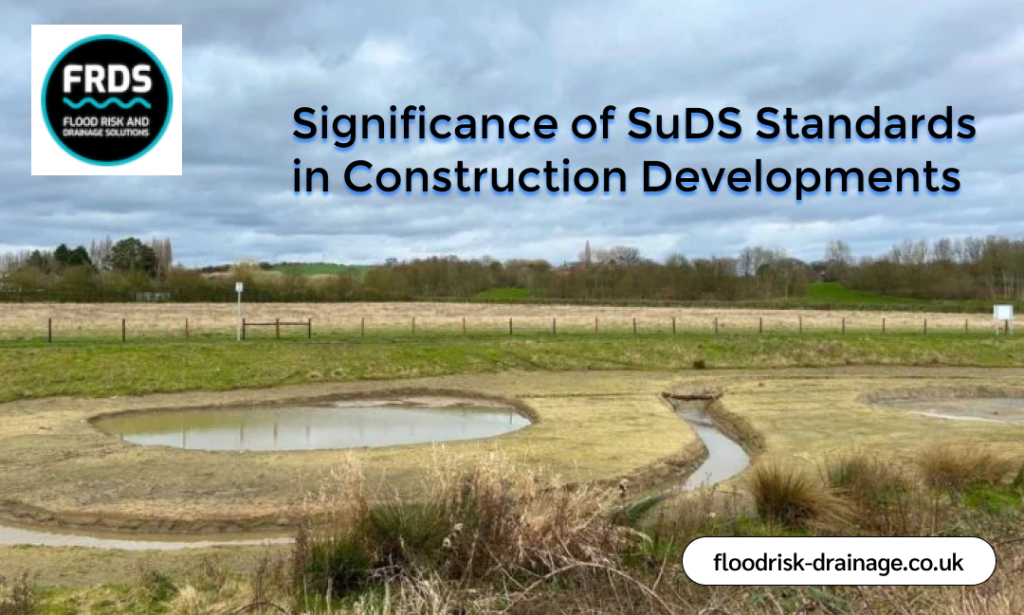
Sustainable Drainage Systems (SuDS) are designed to manage surface water in a more natural and efficient way, reducing flood risk in urban areas. There is a greater emphasis on sustainability and long-term water management with the release of updated 2025 SuDS Standards. These guidelines encourage developers to think beyond conventional drainage techniques by adopting more intelligent approaches. Adherence to SuDS Standards is now vital in construction to ensure compliance and develop future-proofed schemes using Sustainable Drainage Systems (SuDS).
Overview of the 2025 SuDS Standards
The Department for Environment, Food, and Rural Affairs, referred to as Defra and published new SuDS standards on 19th June 2025. These all guidelines represent a milestone in drainage policies and the guidelines on sustainable drainage systems facilitate the management of surface water runoff. Moreover, the new guidelines published in 2025 focus more on water quality, biodiversity, amenity, and maintenance. Therefore, the SuDS standards are now mandatory for large schemes, ensuring better compliance with sustainable drainage systems.
Are the Latest SuDS Standards Compulsory for Construction Projects
It is essential for developers and planners to understand whether the new SuDS Standards are mandatory, as they play an increasingly important role in determining the success of modern construction projects.
Not Yet Statutory
The new SuDS standards are not legally binding, as they have not been implemented under Schedule 3 of the Flood and Water Management Act 2010.
Absence of Schedule 3 Implementation
Since Schedule 3 has not been enacted, Sustainable Drainage Systems (SuDS) remain non-statutory. So, it creates ambiguity with the implementation often depending on interpretation rather than strict legal enforcement.
Strong Influence of Planning Policies
The National Planning Policy Framework (NPPF) requires Local Planning Authorities to promote sustainable drainage systems. Therefore, SuDS Standards have an influence on planning policies.
Avoiding Delays and Risks
For developers and consultants, the benefits of aligning with Sustainable Drainage Systems (SuDS) lie in avoiding delays, redesign, or refusal of schemes, making compliance a necessity in the modern construction industry.
What Makes the New SuDS Standards Different From Earlier Guidance
The updated SuDS Standards introduce a broader and more sustainable approach, transforming drainage design into an important element of modern construction practices.
Shift From Hydraulic Focus to Multifunctional Design
The 2025 SuDS Standards move beyond the earlier hydraulics-focused approach of 2015, introducing a broader framework. Instead of managing only water flow, the new standards emphasise multifunctional outcomes, ensuring that drainage systems contribute to environmental, social and urban design goals.
Introduction of Seven National Standards
A key update is the structured seven standards framework. These give greater emphasis on water quality, amenity, biodiversity, and long-term maintenance, reflecting the expanded role of SuDS Standards in creating sustainable and resilient developments.
Recognition of SuDS as Critical Infrastructure
The revised standards recognise SuDS as critical infrastructure, as opposed to earlier standards. Moreover, the revised standards support urban planning by enhancing air and water quality, managing flood risk, and providing broader ecological and community benefits.
Stronger Focus on Water Quality and Compliance
The new standards have introduced the assessment of water quality and the implementation of control measures. This is particularly important for sensitive sites, ensuring that SuDS Standards are delivering water quality in line with stricter regulatory demands.
What Are the Main National SuDS Standards Introduced in 2025
The SuDS Standards for 2025 are centred around sustainability and functionality, allowing modern development to manage water effectively while supporting environmental, social, and long-term infrastructure objectives.
Runoff Control and Drainage Hierarchy
The updated SuDS Standards have reinforced the importance of runoff management in a drainage hierarchy. This means that every suds system must be designed using sustainable approaches. In the new Flood and Water Management framework, there is a requirement that developers must provide evidence and justification in using lower priority discharge approaches.
Everyday Rainfall Management (Interception)
Sustainable Drainage Systems (SuDS) must be able to capture and manage the first 5mm of rainfall. It includes ensuring that frequent rain is effectively controlled and this is ensured by the SuDS Standards. Moreover, this principle supports the implementation of the Flood and Water Management principles by enhancing the efficiency and sustainability of each and every suds system.
Extreme Rainfall and Flood Control
The new SuDS standards provide solutions for extreme weather conditions by clearly stating the design standards for the infiltration and discharge rates. Every system must meet regulatory expectations under the Flood and Water Management framework. These solutions align with the Flood and Water Management Act for ensuring that developments remain resilient to increasing climate challenges.
Water Quality, Amenity, and Biodiversity
In addition, Sustainable Drainage Systems (SuDS) now need to improve water quality by carrying out risk-based assessments, as well as providing amenity and biodiversity benefits. The revised SuDS Standards ensure that all suds systems provide benefits to water quality, amenity, and biodiversity. This approach aligns with the Flood and Water Management approach to environmental protection.
Long-Term Design and Maintenance
The SuDS Standards now require all SuDS systems to be designed to last over the long term, including the construction, operation, and maintenance phases. Sustainable Drainage Systems (SuDS) need to last a long time, have minimal environmental impact, and be structurally robust. It aligns with the Flood and Water Management approach to long-term reliability and avoiding future infrastructure risks.
Final Words
To sum up, implementing an effective suds system will reduce the risk of flooding, improve water quality and promote sustainable development. This is because, with the rise of regulations under the Flood and Water Management Act, there is a move towards stricter compliance and implementation. As the world faces various climatic challenges, it is clear that these systems ensure that developments are compliant with construction and environmental regulations.